IBISA – Science Inspired by Nature, Without Borders
Innovative Bioinspired Materials for Sustainable Applications | Erasmus Mundus Joint Masters
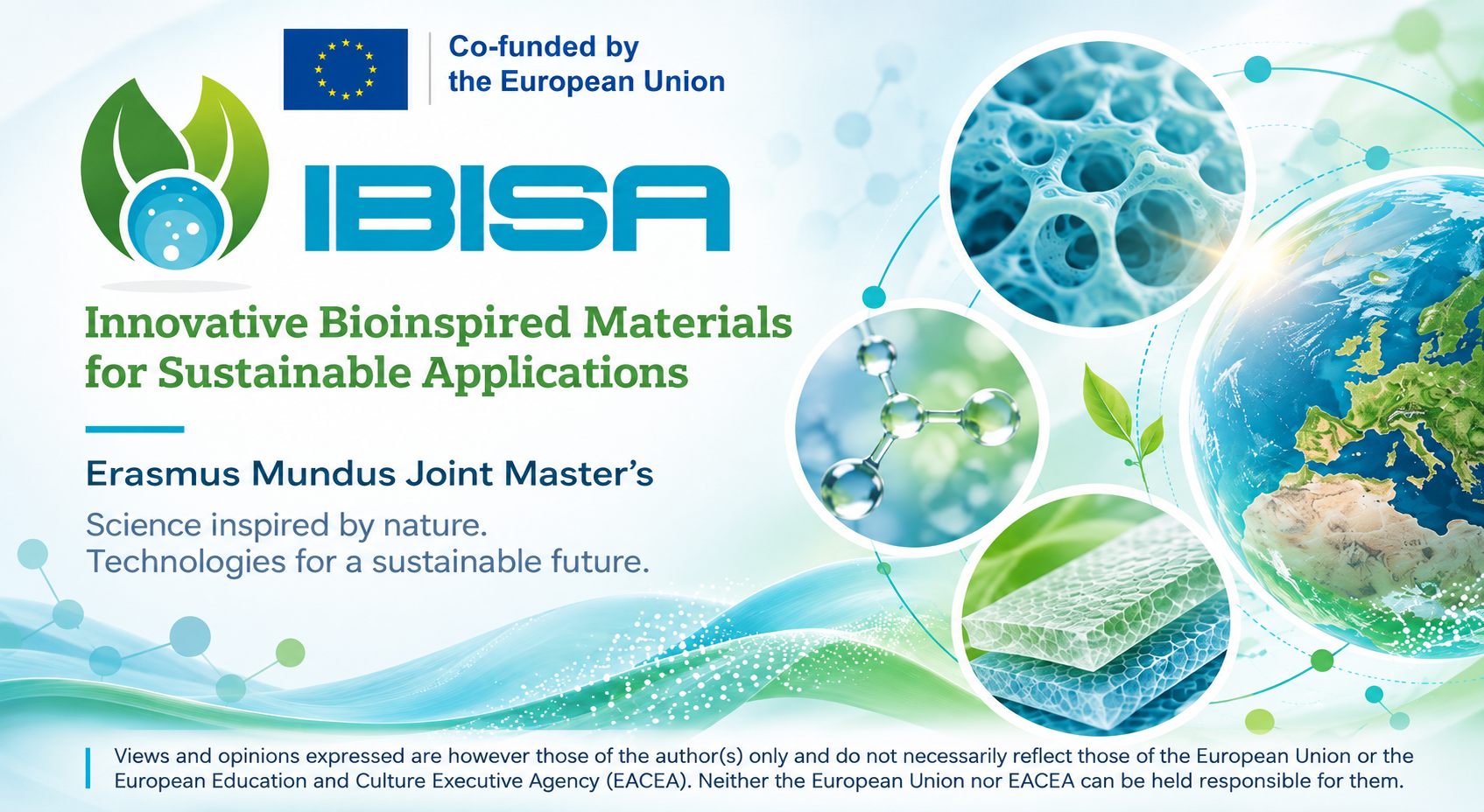
IBISA is co-funded by the European Union under the Erasmus+ programme (Erasmus Mundus Joint Masters). The project has been awarded an EU grant of EUR 3,912,000.
About IBISA
Nature not only provides a fascinating subject for scientific research; it also offers inspiration for developing new technologies. The layered structure of seashells, the hierarchical structure of bone, and the ability of living organisms to respond to changes in their environment are just a few examples of natural solutions that can inform the design of new materials.
This interplay between nature and modern technology lies at the heart of IBISA (Innovative Bioinspired Materials for Sustainable Applications), an Erasmus Mundus Joint Master’s programme. The IBISA programme brings together chemistry, materials engineering, nanotechnology, biotechnology and bioengineering and aims to provide students with the knowledge and skills needed to develop innovative materials and technologies inspired by nature, with potential applications in medicine, energy and environmental protection, while embracing the principles of sustainable development.
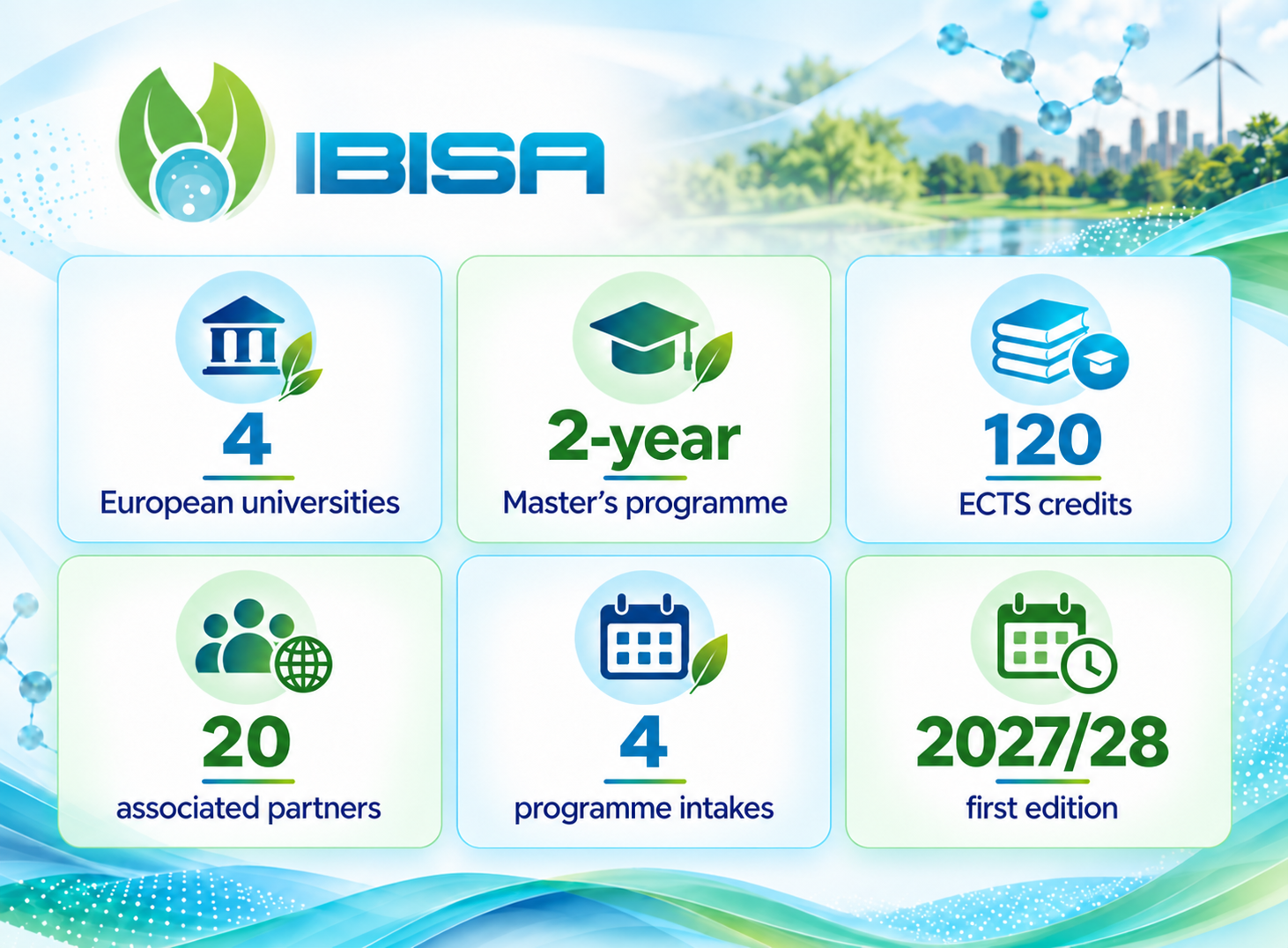
IBISA at a Glance
Our Partner Universities
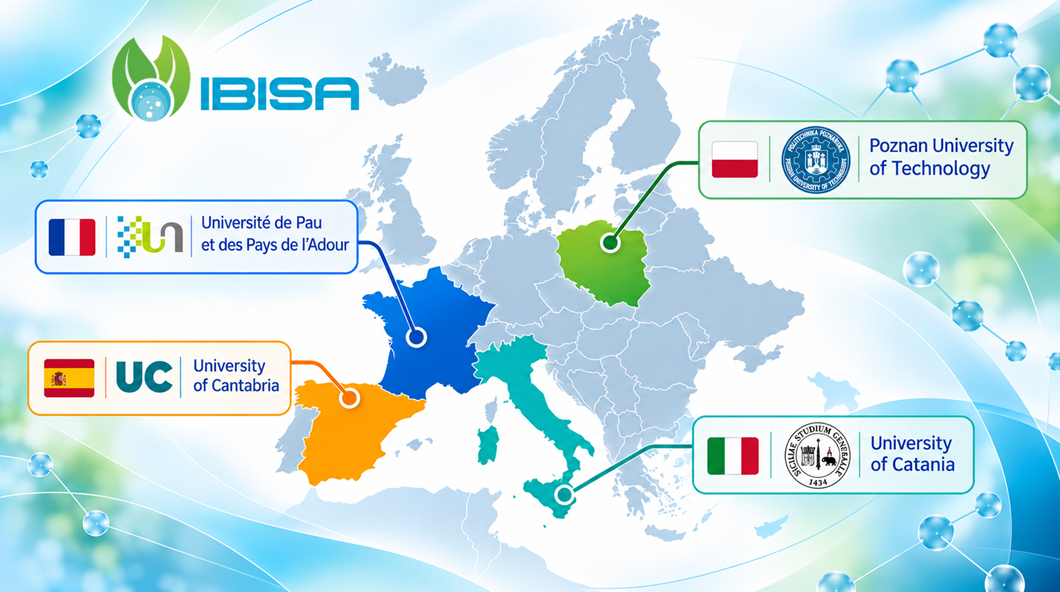
IBISA is jointly developed and delivered by a consortium of four European universities. Poznan University of Technology (Poland) coordinates the programme in partnership with the University of Cantabria (Spain), the University of Catania (Italy) and the Université de Pau et des Pays de l’Adour (France). The consortium will also collaborate with 20 associated partners from academia, research and industry.
Study Pathway – How Does Mobility Work in IBISA?
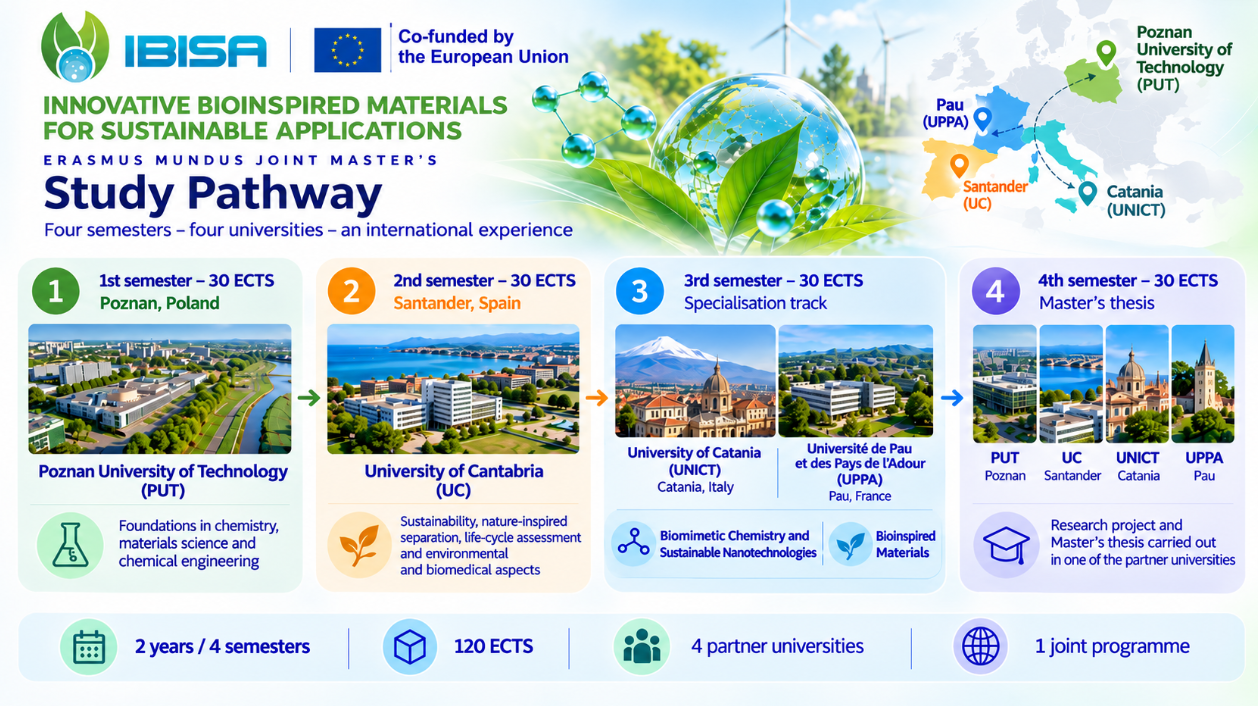
International academic mobility is a defining feature of IBISA. Students will study at partner universities in at least three European countries, gaining knowledge and experience in different academic environments. Each of the four semesters forms part of a jointly developed, integrated curriculum that draws on the expertise and specialisations of the partner universities. This structure enables students to strengthen their scientific and practical skills while experiencing different approaches to research, teaching and technological problem-solving.
Admissions and Scholarships
The first IBISA intake is scheduled for the 2027/2028 academic year. The programme will be taught in English and is designed for students with a background in chemistry, chemical engineering, materials science, biotechnology or related disciplines who are interested in advanced materials and sustainable technologies.
Across four intakes, up to 70 Erasmus Mundus scholarships will be available to outstanding applicants from around the world. Each scholarship provides EUR 1,400 per month to support students throughout the two-year programme, including compulsory mobility periods.
An additional 10 places are planned for students without an Erasmus Mundus scholarship.
Admissions will be organised jointly by the IBISA partner universities through a common selection process. Detailed information on application deadlines, eligibility criteria, required documents and scholarship opportunities will be published on the official IBISA website.
Admissions to IBISA – details coming soon
The IBISA Team at Poznan University of Technology (PUT)
Prof. Magdalena Regel-Rosocka, DSc Eng. – Consortium Academic Coordinator (CAC)
Monika Rojewska, PhD Eng. – Local Academic Coordinator (LAC)
Natalia Burlaga, PhD Eng. – Project Manager (PM)
Agnieszka Barcik, MSc. – Project Secretariat (PS)
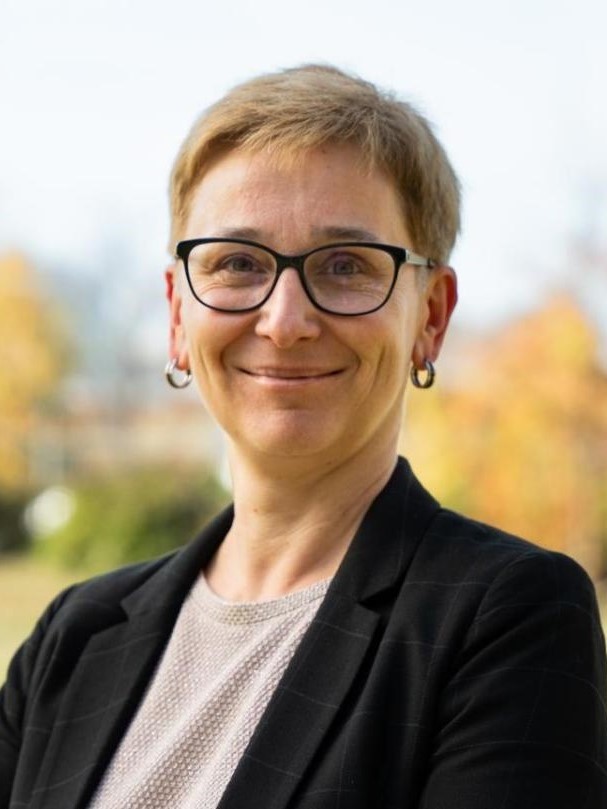
Magdalena Regel-Rosocka, prof. PUT
email: magdalena.regel-rosocka@put.poznan.pl
She graduated from the Faculty of Chemical Technology at Poznan University of Technology, where she has held the position of Professor since 2019. Her research focuses on sustainable development, particularly the recovery of metals from waste materials. With many years of experience in educational initiatives, she has been actively involved in international academic cooperation, including serving as the Erasmus+ Faculty Coordinator.
She is also actively engaged in the EUNICE European University alliance, where, at Poznan University of Technology, she coordinates activities aimed at strengthening cooperation between academia and the business sector, supporting international student research clubs and summer schools, and fostering student entrepreneurship. Among these initiatives is the EUNICE Imagine Innovation Cup competition.
Beyond her professional activities, she enjoys an active lifestyle, with Nordic walking, swimming and cycling among her favourite pursuits. She is passionate about travelling and discovering the world – from exploring new places and meeting people to learning languages and experiencing different cuisines and customs. She is also an enthusiastic collector of photos and the good memories they capture.
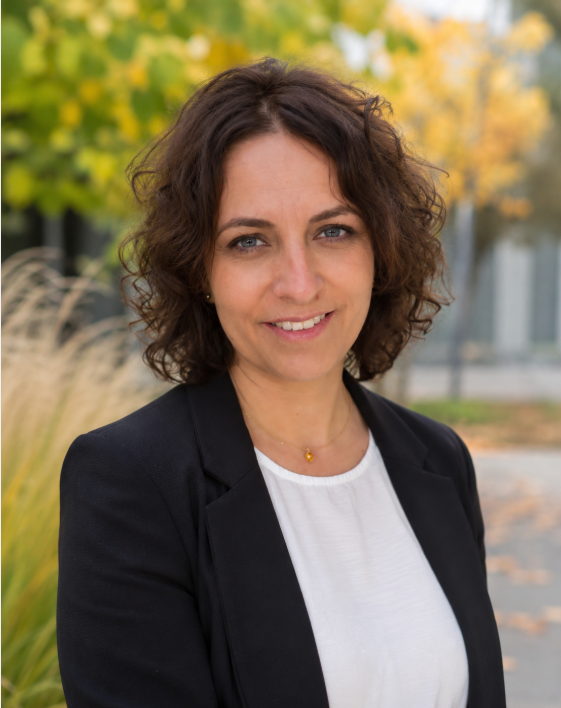
Monika Rojewska, PhD Eng.
email: monika.rojewska@put.poznan.pl
She is a researcher and lecturer at the Faculty of Chemical Technology at Poznan University of Technology. Her research focuses on the physical chemistry of surfaces and interfaces, with particular emphasis on interactions between polymers, lipids and biological molecules. Her scientific interests also include mucoadhesive systems and their potential applications in drug delivery. She is especially interested in understanding molecular interactions at biological interfaces and their role in the development of novel functional and bioinspired materials.
Teaching and working with students are also an important part of her academic career. As the IBISA Local Academic Coordinator at Poznan University of Technology, she is actively involved in developing international academic cooperation and creating opportunities for students to expand their knowledge, gain practical experience and broaden their perspectives in an international environment.
Beyond her professional activities, she enjoys listening to rock and jazz music, reading crime novels and hiking in the mountains. She is also passionate about travelling, discovering new places and exploring different cultures and traditions.
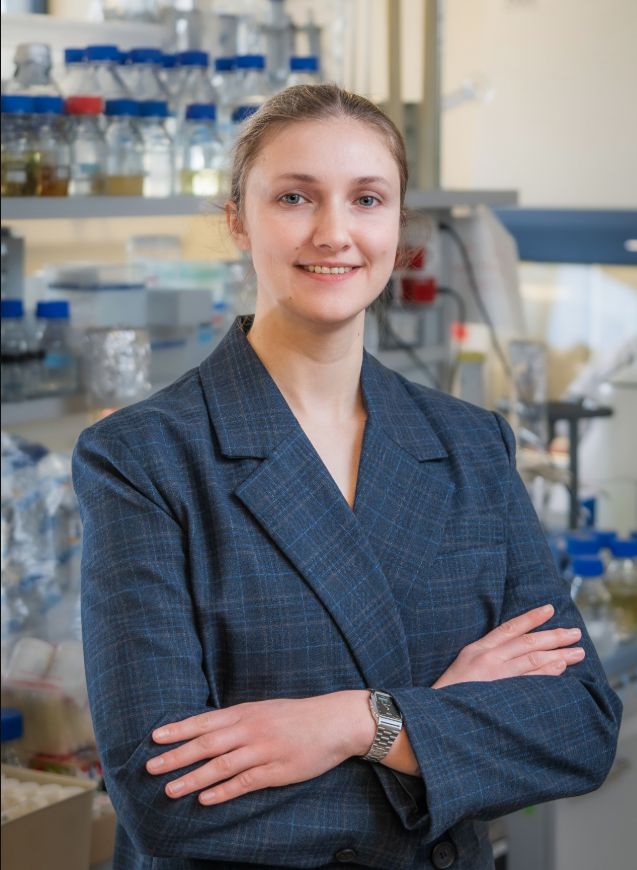
Natalia Burlaga, PhD Eng.
email: natalia.burlaga@put.poznan.pl
She is a researcher and entrepreneur affiliated with Poznan University of Technology. Her research focuses on the development and characterisation of colloidal systems containing microorganisms and bioactive substances. She is also the co-founder and CEO of MiCo Scientific, a spin-off company developing innovative technologies to enhance the stability and functionality of probiotic bacteria.
As the IBISA Project Manager, she is responsible for the organisational and administrative aspects of the project, ensuring the smooth implementation of planned activities. She coordinates day-to-day tasks, supports student recruitment and mobility processes, and facilitates collaboration between partner universities.
Beyond her professional activities, she enjoys travelling, discovering new places and building LEGO sets.

Agnieszka Barcik, Msc.
email: agnieszka.barcik@put.poznan.pl
As Senior Project Specialist in Research and Projects Office she has been supporting researchers and doctoral students in applying for project funding and scholarships, as well as in the successful implementation and final accounting of projects.
Within the IBISA project, she is part of the project secretariat, which ensures effective communication and the efficient processing of documentation between the departments and offices involved in the administrative aspects of the project.
She appreciates quiet moments when she can relax by cooking at home for family and friends or getting creative and doing DIY projects, but she also really enjoys going out to have fun to good music at concerts.
Our Associated Partners
Funding and Programme Information
IBISA is co-funded by the European Union under Erasmus Mundus Joint Masters (Erasmus+).
The grant awarded to the project amounts to EUR 3,912,000. Poznan University of Technology serves as the coordinating institution.